 One of the biggest issues facing any medical facility is the risk of healthcare-associated infections (HCAIs). While many people assume healthcare-associated infections (HCAIs) create operational and financial problems, the real cost is to staff and patients. Vulnerable patients and residents are obviously at serious risk from pathogens like Clostridioides difficile, Norovirus, and multidrug-resistant Escherichia coli.
Managing human waste is one of the highest-risk touchpoints in clinical hygiene. Every time your staff handles a used bedpan, commode pot, urine bottle, or washing bowl, they step onto the front line of transmission. Manual rinsing in an open sluice hopper generates contaminated aerosols, risks splash injuries, and leaves surface decontamination to guesswork.
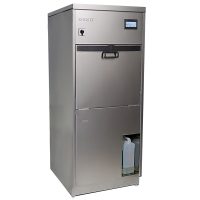
To break this chain of transmission, modern hospitals, care homes, and hospices rely on thermal bedpan washer . Machines like the DEKO 190 series from Dekomed replace hazardous manual washing with an automated, sealed, and validated decontamination process.
Why Sluice Room Automation Is Critical

A sluice room (or dirty utility room) processes biological waste around the clock. While it can be tempting to use manual cleaning, even the most conscientious staff cannot guarantee consistent decontamination.
Aerosolisation and Splashes: If you have ever used the tap and running water to fill a washing-up bowl, you will have seen water splash up and out of the sink onto work surfaces and walls. If this happens when running water into a slop hopper, minuscule droplets of bacteria and viruses will inevitably become airborne. Worse, the droplets can then contaminate scrub suits, doors, and door handles.
Incomplete Pathogen Kill: Cold or tepid tap water fails to kill spores and vegetative bacteria. Chemical soaking tubs create strong fumes and inconsistent contact times.
Staff Fatigue and Human Error: During busy shifts in a 60-bed care home or an acute hospital ward, staff may take shortcuts when scrubbing.
Automating this workflow with a closed bedpan washer-disinfector ensures that contaminated receptacles enter the chamber, the door seals, and human waste empties directly into the sewer without staff exposure.
How DEKO Washer Disinfectors Process Clinical Receptacles
Healthcare facilities use a wide range of reusable toileting and washing aids. Sluice equipment must accommodate all these items without requiring complex rack changes.
Dekomed engineers the DEKO 190 series to process human waste containers with purpose-built internal architecture.
Bedpans and Commode Pots
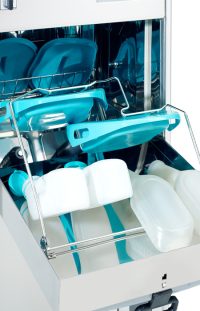
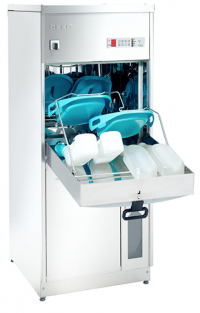 Bedpans and commode inserts trap organic matter beneath curved rims and handles. The DEKO 190 automatically empties and cleans up to two bedpans with lids simultaneously. Once you secure the pans into the integrated holders and close the door, high-pressure water jets flush the heavy soil directly down a 90–100 mm drain outlet. Dedicated rotating arms and fixed nozzles scour every corner, stripping away biological films before thermal disinfection begins.
Reusable Urine Bottles
Narrow necks make urinal bottles difficult to clean by hand. The DEKO 190 incorporates dedicated water-jet nozzles configured for four urine bottles at once. Pressurised water and detergent inject straight up into the bottles, clearing residue from internal bases and corners that ordinary sprays miss.
Patient Wash Bowls and Kidney Dishes
Wash bowls carry dead skin cells, soap scum, and resident skin flora, including MRSA. The DEKO 190 features an integrated fold-down stainless steel wire shelf. This shelf creates space to wash and disinfect up to four patient wash basins, suction bottles, measuring jugs, or kidney dishes in a single cycle.
The Core Science: Validated Thermal Disinfection
Cleaning removes visible soil, but thermal disinfection kills microscopic pathogens. Dekomed machines differ because they use moist heat, rather than caustic chemicals, to achieve complete microbial inactivation.
The DEKO 190 uses an in-built steam generator which floods the wash chamber with saturated steam. The machine maintains a precise temperature (such as 80°C or 90°C) for a pre-programmed hold time. This is specifically designed for microbial proteins, destroying vegetative bacteria, fungal pathogens, and viruses.
Tailored Benefits Across Care Settings
Different healthcare environments have unique, specific demands.
Acute NHS & Private Hospitals
The main challenge is high volume and rapid patient turnover, high bedpan volume and severe antibiotic-resistant strains.
Dekomed Advantage
Dekomed equipment can process 2 bedpans and 4 bottles simultaneously; the heavy-duty 600 L/min pump clears stubborn bio-burden quickly.
Residential Care Homes
Fragile residents who are typically prone to recurrent Urinary Tract Infections, gastrointestinal outbreaks, and high commode usage.
Dekomed Advantage
Unlike hospitals, residential care homes do not have much space for machinery. The Dekomed Washer Disinfector machines feature a compact footprint (600 mm wide × 630 mm deep) that fits snugly in utility rooms while cutting water and power use.
Palliative Hospices
Need for dignified, quiet, and spotless infection control near resident rooms.
Dekomed Advantage
Sound- and heat-insulated double walls keep cycle noise low, preserving a calm environment.
Practical Infection Prevention Features in Dekomed Units
Dekomed designs equipment around real-world sluice room challenges. Several key engineering features are automatically built in to directly support your infection control teams:
- Touch-Free Door Options: The most common hand-hygiene issue is staff touching dirty machinery handles. The DEKO 190 features an optical sensor for hands-free door opening, which effectively prevents door surfaces from transferring pathogens between loads.
- Targeted Water Delivery: The wash chamber features three rotating spray arms and eight fixed spray jets. This design eliminates “spray shadows,” ensuring water hits every surface regardless of item design.
- Automatic Chemical Dosing: An internal dosing system delivers the exact amount of cleaning agent required and sounds a low-level warning before chemicals run out.
- Vapour Condensation: An integrated condenser cools steam before venting. This prevents hot, humid, aerosol-laden air from escaping into the room when staff open the door.
- Fresh Water Recirculation: Dekomed’s water circulation system uses water and electricity efficiently without compromising washing pressure, helping your facility meet sustainability targets.
Maintaining Long-Term Protection
 Dekomed provides planned preventative maintenance schedules and prompt emergency call-out services across the UK. Periodic calibration verifies that cycle temperatures and pressure levels continue to meet ISO 15883 benchmarks. Dekomed technicians also provide user training so your clinical teams know how to load items, run cycles, and maintain clear separation between dirty and disinfected utensils.
Investing in purpose-built washer disinfectors transforms your sluice room from a potential infection hot-spot into an automated barrier against disease. By removing manual handling, standardising thermal disinfection, and processing all primary patient care utensils in one unit, Dekomed keeps your staff safe and your patients protected.
If you are interested in purchasing a Dekomed washer-disinfector for your healthcare facility and need advice or guidance for the buying process, feel free to contact our friendly and knowledgeable customer service team today on 0161 483 7333